Selected TEACHING Projects
I am an Associate Professor at Michigan State University, I have been teaching at MSU since Fall of 2009. During this time I have taught a variety of courses ranging from print to digital in areas such as typography, motion, interaction, design systems, data visualization, and UX design. I contribute to both the undergraduate BFA in Graphic Design and BA in Experience Architecture programs. Students in my courses range from first-year to senior, both majors, non-majors, and minors. Additionally, I work with graduate students in our 3-year MFA program through teaching the Art and Design Pedagogy course or serving on individual graduate committees.


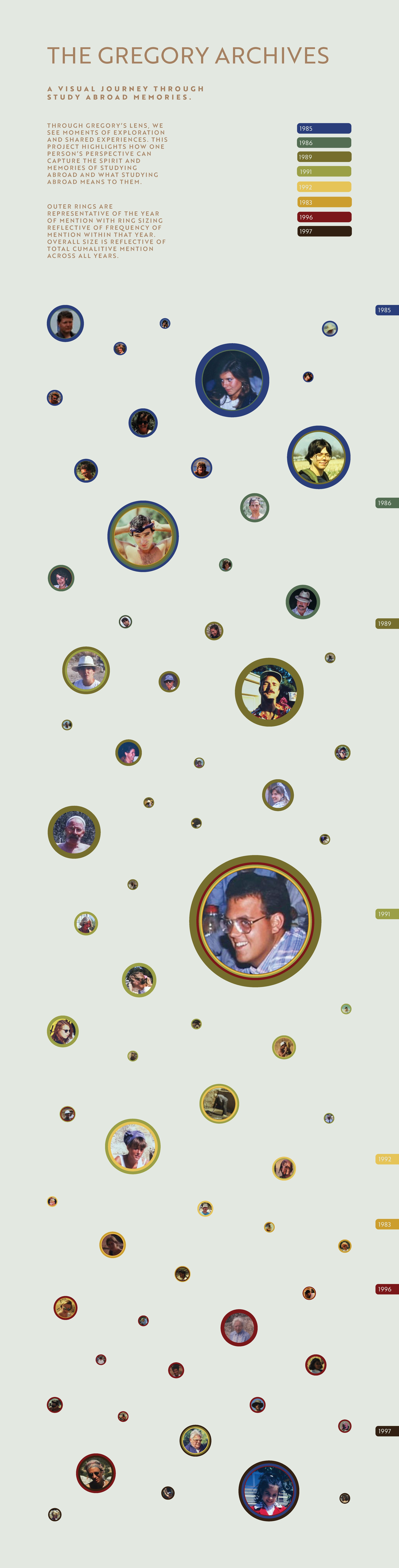


Visualizing the Gregory Archive
With students from Fall 2024 Visualizing Data course
This is a collaboration with Professor Jon Frey who oversees the image archive of archaeologist Timothy E. Gregory. Students worked in teams of 3 with content from the Gregory Archive, a collection of over 30,000 35mm slides representing various aspects of archaeological fieldwork, art, and architecture of the classical and Byzantine periods as well as daily life in various communities in the Mediterranean in the second half of the 20th century. Together students developed static and interactive visualizations in order provide a demonstration of the diversity and utility of the archive.
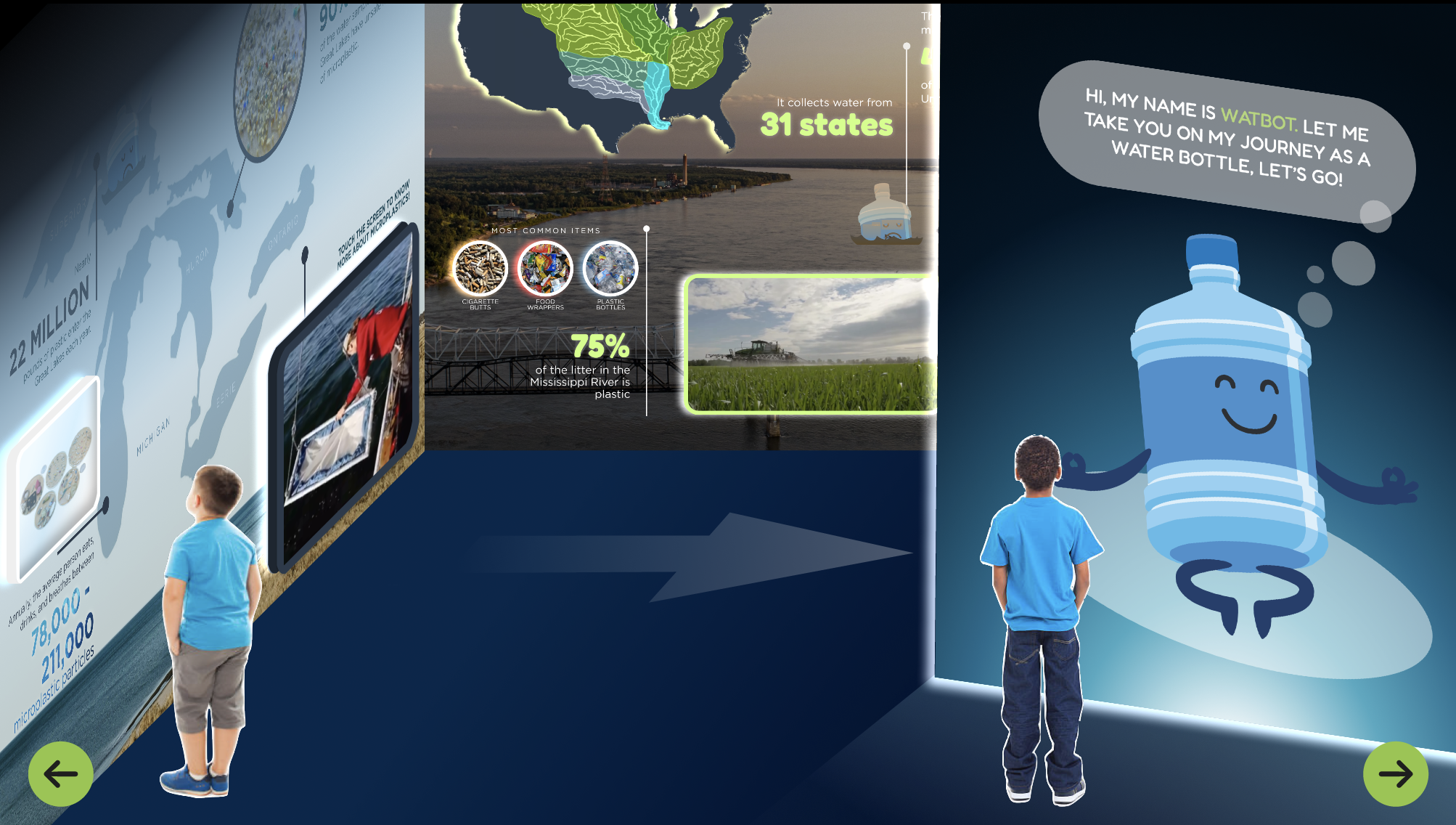


INTERACTIVE LEARNING: SCIENCE ON A SPHERE
The images shown here are from an interactive prototype created by students Jam Bayoneto, Evelyn Diamond, Rageon Thomas, Linda Wang, Fall 2023
Students collaboratively worked together in teams of 3 to propose an interactive learning experience for middle-school students visiting the MSU Museum’s Modular “Science on a Sphere” Lab during a class field trip visit. They planned for their audience to learn about global issues related to one or more of the following topics: 1) climate change 2) culture 3) consumerism, through their engagement with maps and data they access via the interactive kiosk and view on the sphere. The group’s engaged in an interactive process that included brainstorming, writing user need statements, creating user task flows, assessing the content, sketching, storyboarding, and drafting mood boards. This process informed the creation of medium-fidelity prototype.


Data Visualization design
In fall 2024 I facilitated a selected topics course focused on data visualization design. Students began the course surveying the many data structures commonly used and presented on prominent data visual designers. The first project asked students to survey their peers on a specific topic and then visualize the results. The second project required students to source available open-sourced data then create an effective visualization. Students individually created the visualizations by analog and digital methods using only Adobe Illustrator.
Interactive BINGO Prototype
A well-designed interface is critical to the success of an interactive environment. Learning and practicing the Interactive Design Fundamentals (interactions vs. gestures + patterns) as well as Visual Design Fundamentals (communication + direction + amusement) is a component of this introductory course in Interaction Design. This project introduced students to these fundamentals and asked them to reimagine how the popular game "BINGO" can be played on a smart phone device. Using Figma, a commonly used web-based prototyping and design tool, student designed an interactive medium-fidelity prototype. They followed an interaction design process resulting in the final product that was a simulation/model/prototype of their idea.


Collective Publication / Designer Interview
A student of graphic design is a very different experience than being a professional designer. Connecting with professionals to learn about the differences in timelines, processes, and expectations will illuminate the profession in a new way to current students. This project provided the entire class with a new group of connections and knowledge about the field prior to entering the workforce themselves. Students were assigned an alumni of the program/professional designer, they interviewed the designer, and organized information into an editorial layout. The individual spreads were collected and printed in a publication that was shared with students in the graphic design program. Additionally, the piece served as a collection of alumni stories for the college.

Allyssa Harris
Reimagined Everyday Objects
A designer's ability to reimagine existing systems and to plan for future scenarios is a critical skill. Additionally, how one communicates ideas that may use technologies that don’t yet exist relies on effective design and story-telling abilities. This project asks students to reimagine an everyday object as a future enchanted object as defined by David Rose in his book, Enchanted Objects: Design, Human Desire, and the Internet of Things.
Rose defines enchanted objects as objects that start as ordinary things that are “augmented and enhanced through the use of emerging technologies—sensors, actuators, wireless connection, and embedded processing—so that it becomes extraordinary.” This enables the object to become more useful, delightful, informative, connected, and more engaging that it was in the first place. (P. 47) He also describes enchanted objects as “ordinary things made extraordinary” (p. 7).

McKenzie Collier
Design Basics Instruction Guide
The shift to online and hybrid teaching in k-12 education (due to the pandemic) brought about many challenges as well as new opportunities. In person, elementary students often completed assignments by using the typical tools of pencil and paper, now, in the online context, the use of various digital platforms, tools, and media has been introduced. In this new context, elementary aged students respond to and complete assignments by creating posters, videos, slide decks, etc. They complete these artifacts either individually or collaboratively and sometimes the responses are hand-drawn/written then presented digitally. These types of responses to assignments are being used by their teachers to gage their understanding of what they are learning. In these scenarios, students are inadvertently becoming “visual communicators”. While the many digital tools and applications elementary students are using offer “visual communication” features and elements, students are unaware of the design principles and methods they could be and might already be using. This project asks graphic design students to reflect, respond, and transfer knowledge from previous coursework in Graphic Design and account for elementary students, specifically 3-4th graders (9–10 year olds), in their explanation of one design principle through a short (30s-50s) animated motion graphic.